Geometric Langlands Conjecture
The 'grand unification' connecting number theory, algebraic geometry, and representation theory.
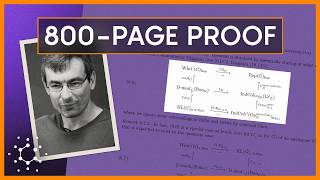
The Langlands program is often called the 'grand unified theory of mathematics.' The geometric Langlands conjecture establishes an equivalence between D-modules on BunG and quasi-coherent sheaves on LocSysĞ. Gaitsgory led a 30-year effort culminating in 5 papers totaling 800+ pages.
Formula
An equivalence of derived categories: D-modules on the moduli of G-bundles correspond to sheaves on Ǧ-local systems.
The Hecke operators act on the automorphic sheaf by the corresponding representation of the dual group — the geometric analog of being an eigenfunction.
The original Langlands conjecture for number fields, of which geometric Langlands is the function-field / algebro-geometric avatar.
Summary
The Langlands program is often called the 'grand unified theory of mathematics.' The geometric Langlands conjecture establishes an equivalence between D-modules on BunG and quasi-coherent sheaves on LocSysĞ. Gaitsgory led a 30-year effort culminating in 5 papers totaling 800+ pages.